
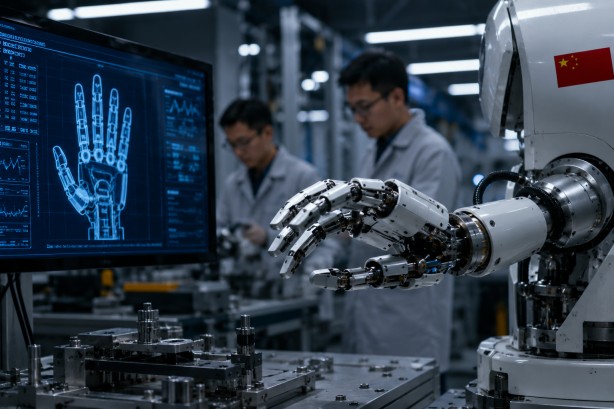
In China, the race to perfect robotic hands is picking up momentum as companies strive to overcome one of the most formidable hurdles in humanoid robotics. Leveraging artificial intelligence and the country’s robust manufacturing infrastructure, Chinese startups are engineering robotic hands that can handle delicate tasks such as grasping, tool usage, and routine activities. This technology is anticipated to be pivotal in making humanoid robots viable for use in domestic settings, healthcare, and various industries.
The challenge lies in replicating the human hand’s flexibility and precision, which experts argue is far more complex than constructing the rest of a humanoid robot. Developers face significant hurdles both in hardware—such as designing compact motors and sensors—and in software, which must enable robots to interpret touch, pressure, and intricate movements accurately.
China’s status as a leading force in robotics manufacturing stems from its sophisticated supply chain and a government-supported emphasis on “embodied AI.” This focus has fostered a burgeoning robotics ecosystem, fueling rapid innovation. Companies are not only advancing robotic hand technology but also creating wearable sensor gloves and AI systems capable of learning human movements through real-world data collection.
Improving the dexterity of robotic hands is seen by researchers as a crucial step toward equipping robots to perform a variety of everyday tasks, ranging from household chores to industrial applications and advanced prosthetics. This development could significantly enhance the versatility and utility of humanoid robots.
Industry leaders are optimistic that continued progress in AI and robotics will eventually lead to humanoid robots that operate seamlessly alongside humans. Such advances promise to unlock new possibilities across sectors including manufacturing, healthcare, and consumer services, as robots become more integrated into daily life.