
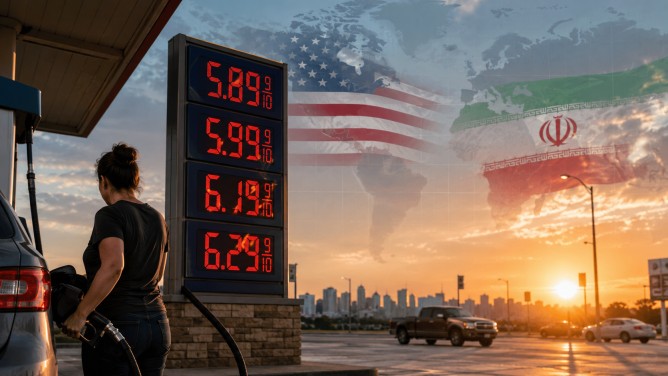
Gasoline prices in the United States have surged to their highest level for the month of August amid stalled diplomatic negotiations between the U.S. and Iran and ongoing tensions in the Strait of Hormuz, a crucial conduit for global oil shipments. The national average for a gallon of gasoline has climbed to $4.06, marking an increase of about 5 cents from the previous week’s figures and approximately $1 more than the same time last year. The impact is more pronounced in states like California and Hawaii, where average prices hover around $5.50 per gallon.
The escalation in gasoline prices is closely tied to elevated oil prices, which have remained high since the onset of the US-Israel conflict with Iran. This situation has been exacerbated by disruptions in the Strait of Hormuz, through which a significant portion of the world’s oil supply is transported. At one point, Brent crude oil prices spiked to $112 per barrel before experiencing some decline, yet they remain considerably higher than during the same period last year.
Initially, gasoline prices saw a brief decline when temporary agreements between the U.S. and Iran eased tensions. However, these prices have once again started to rise following the collapse of talks aimed at resolving Iran’s nuclear program. A 60-day window for diplomatic progress passed without an agreement, and this, coupled with fresh threats from Trump against Oman, has fueled fears of prolonged conflict in the region.
The upward trajectory of fuel costs is adding to the financial strain on American households, which are already grappling with increased living expenses. Over the last six months, consumers in the U.S. have reportedly spent tens of billions of dollars more on gasoline compared to what they would have paid prior to the conflict. Should energy prices remain elevated for an extended period, there is concern that this could lead to renewed inflationary pressures.