
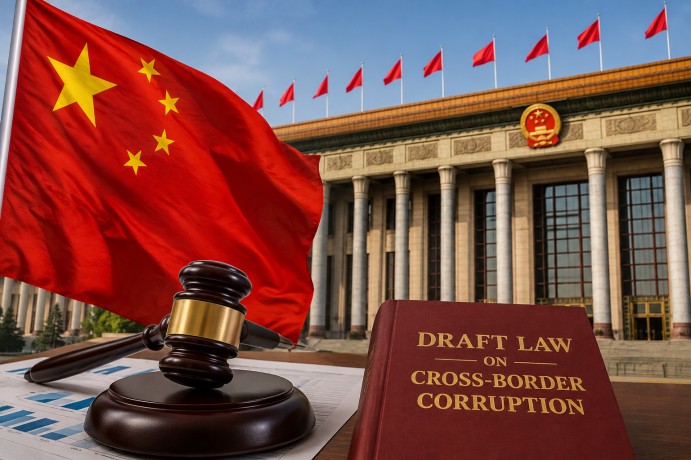
In a bid to bolster its anti-corruption efforts, China’s top legislative body, the National People’s Congress Standing Committee, is poised to examine a new draft law focused on tackling cross-border corruption. This legislative review is scheduled to occur during the committee’s session from August 25 to 28. The proposed law aims to enhance China’s existing measures against corruption while fostering international collaboration to track down and apprehend corrupt officials and fugitives who have fled beyond China’s borders.
This initiative is part of a broader legislative agenda, with the draft law highlighted as a significant focus for the current term of the National People’s Congress. It has also been earmarked as a critical legislative priority for the year 2026. China has been intensifying its efforts to address the issue of officials accused of corruption who escape abroad. Notably, in 2025, the nation successfully repatriated 963 fugitives implicated in corruption cases, according to reports from the country’s leading anti-corruption agency.
Alongside the anti-corruption legislation, the Standing Committee is set to deliberate on various other legislative proposals and amendments. These include matters concerning healthcare security, which aims at ensuring a robust health system; farmland protection, focusing on safeguarding vital agricultural resources; and agriculture, which remains a cornerstone of China’s economy.
Further topics on the legislative agenda include national defense mobilization, which addresses the strategic readiness of the country’s defense forces, and banking regulation, essential for maintaining financial stability. Additionally, lawmakers will review proposals related to water management, crucial for sustainable resource utilization, and road traffic safety, an area vital to ensuring public safety.
Through these legislative efforts, China seeks to address a wide array of domestic and international issues, reflecting its commitment to maintaining security, economic stability, and international cooperation. The outcomes of these deliberations could have far-reaching implications, both within China and in its relations with other nations.