
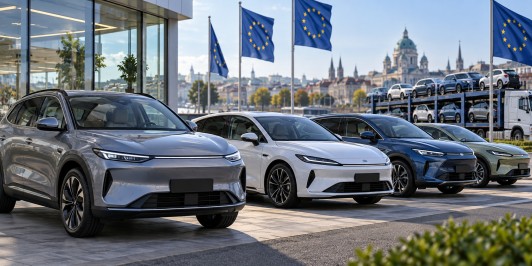
The European Union is grappling with a surge in Chinese-made hybrid vehicle sales, which poses a growing challenge to local automotive manufacturers. This trend has gained momentum despite efforts to curb Chinese electric vehicle imports through anti-subsidy tariffs introduced in 2024. However, these measures did not extend to hybrid models, allowing their market presence to flourish.
Between 2022 and the first seven months of 2026, sales of Chinese-made fully hybrid and plug-in hybrid vehicles in the EU have skyrocketed. From a modest 659 fully hybrid units sold in 2022, the number jumped to 160,662. Similarly, plug-in hybrid sales surged from 56,706 units to 217,764 during the same period. This rapid growth has heightened concerns in Brussels about the competitiveness of European car manufacturers.
In response to this trend, the European Commission has engaged in discussions with China, urging it to voluntarily limit hybrid vehicle exports to the region. Should these talks fail to yield an agreement, the EU is considering implementing safeguard measures, such as quotas, to protect its market.
Chinese automotive companies such as BYD, Chery, and Leapmotor have become key players in the European market, experiencing significant sales growth. Geely, the largest Chinese automotive group in the EU, reported sales of approximately 205,000 vehicles in the first eight months of 2026. Meanwhile, BYD’s sales reached around 177,000 vehicles, marking a notable year-on-year increase.
Currently, hybrid vehicles make up nearly 37% of the European car market, overshadowing fully electric vehicles, which account for just over 21%. With the EU aiming to address its trade imbalance with China and safeguard its automotive industry’s competitiveness, the rise of Chinese vehicle imports remains a critical issue.