
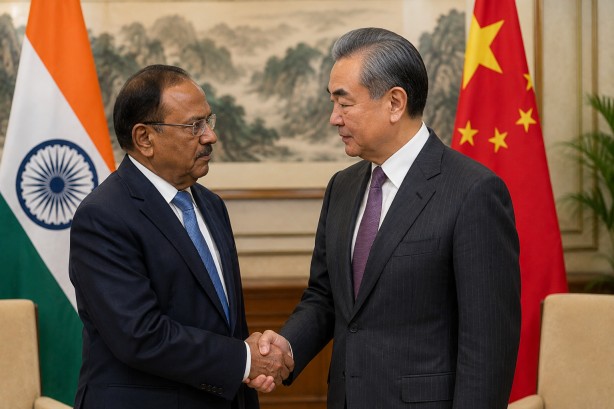
India has reiterated its stance that maintaining peace and tranquillity along its border with China is crucial for fostering positive relations, as National Security Adviser Ajit Doval engaged in talks with Chinese Foreign Minister Wang Yi in Beijing. This meeting marked the 25th round of discussions between the two nations’ special representatives, focusing on resolving their long-standing boundary dispute. Emphasis was placed on boundary delimitation, enhancing border management, and broadening cooperation across the frontier.
During the discussions, both India and China positively reviewed the progress in their bilateral relations and deliberated on strategies to sustain stability along the Line of Actual Control. The countries also reaffirmed their commitment to pursuing a political resolution to the boundary issue, prioritizing their long-term interests. These dialogues stemmed from advancements made after a 2024 understanding between Indian Prime Minister Narendra Modi and Chinese President Xi Jinping aimed at reducing tensions in the Ladakh sector. Subsequently, initiatives such as people-to-people exchanges, the Kailash Manasarovar Yatra, and border trade through designated routes have resumed.
Ajit Doval noted that bilateral ties are gradually normalizing, attributing this improvement to the sustained peace along the border. On the other hand, China emphasized that the boundary issue should be viewed in the broader context of their relationship. Despite their discussions, neither side disclosed significant details regarding the actual demarcation of the disputed boundary. However, both countries agreed to continue negotiations, planning to hold the next round of special representative talks in India in 2027.
These discussions gain added significance as they precede the anticipated visit of Chinese President Xi Jinping to India for the BRICS summit in September. This upcoming visit underscores the importance of efforts to further stabilize bilateral relations. While specific outcomes on boundary demarcation remain undisclosed, the commitment to ongoing negotiations highlights a mutual desire to address and potentially resolve longstanding issues for the benefit of both nations.