
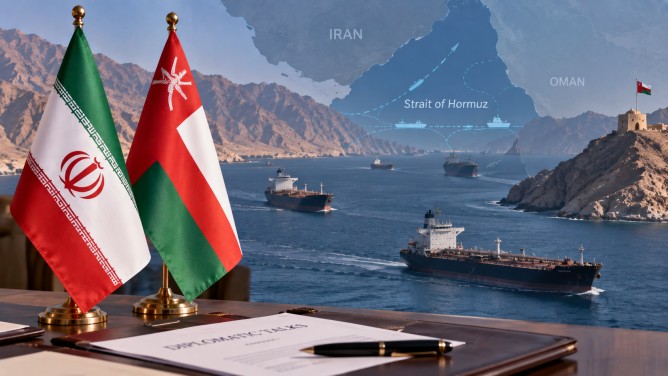
A scheduled meeting involving Iran, Oman, and other Gulf nations to discuss new shipping protocols through the Strait of Hormuz has been delayed indefinitely, with no future date set. The gathering, originally set to occur in Muscat, was meant to address regional security concerns and an initiative by Iran and Oman to enhance the management of commercial shipping in this crucial maritime corridor.
Oman’s Foreign Minister, Badr Albusaidi, indicated that the decision to postpone was made to foster a consensus among the parties involved. Iran also confirmed the postponement was a mutual decision with Oman, following requests from multiple regional stakeholders. The delay coincides with reports of an Iranian commercial ship being struck near Qeshm Island, resulting in one fatality and injuries to four crew members. Maritime sources detailed that the vessel was hit by a projectile while navigating the Strait of Hormuz, leading to a fire and subsequent crew evacuation.
Recent discussions between Iran and Oman have explored alternative navigation paths through the Strait. The proposed system would route inbound vessels through Iranian waters, while outgoing ships would utilize both Iranian and Omani territories. However, Iran has emphasized that any changes to the Strait’s operations are contingent upon satisfying its terms. Iranian authorities have also suggested that Tehran could impose fees on vessels using these new routes.
Currently, commercial traffic through the Strait of Hormuz remains diminished, a significant concern given its status as one of the world’s key oil transit channels. The ongoing disruptions are raising alarms in global energy markets. The delay in talks arises amid broader diplomatic strains in the Gulf region. Reports indicate that Saudi Arabia has called for modifications to the Iran-Oman proposal, while Bahrain has decided against participating in the discussions.
The instability surrounding the Strait of Hormuz has already contributed to elevated oil prices. Compounding the situation, Saudi Arabia has kept its extensive East-West oil pipeline closed following drone attacks, which restricts an alternative oil passage to the Red Sea. The prolonged closure of this pipeline could jeopardize a substantial portion of global oil supply, adding further strain due to the reduced shipping activities through the Strait. Consequently, Brent crude prices have surged past $100 a barrel, reflecting the intensifying regional tensions.