
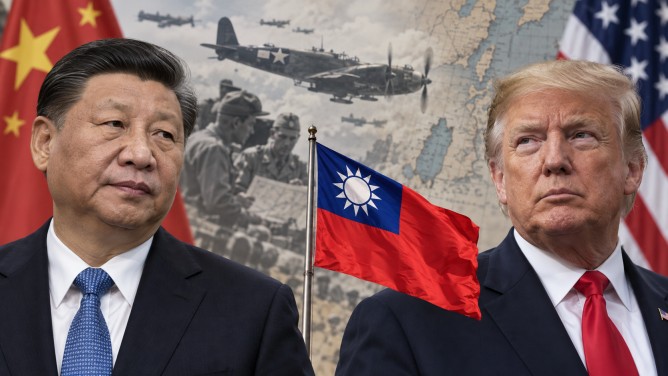
Taiwan finds itself embroiled in a complex debate regarding its World War II history following recent remarks by U.S. President Donald Trump and Chinese President Xi Jinping. During a recent summit, both leaders emphasized the cooperative efforts between the United States and China during the war, with Trump praising the Flying Tigers, an American military unit that aided China against Japanese forces, and Xi recalling the joint struggle against Japan.
The comments have sparked concern in Taiwan, where the government maintains that the China allied with the United States during World War II was the Republic of China (ROC). The ROC governed mainland China at the time and relocated to Taiwan in 1949 following its defeat in the Chinese civil war. Taiwanese officials have accused Beijing of attempting to leverage this historical narrative to bolster its claims over Taiwan.
Opposition figures in Taiwan have criticized the government for allegedly distancing itself from the ROC’s pre-1949 history, highlighting the ongoing tension between historical interpretation and political identity. This issue underscores a broader dispute between Beijing and Taipei concerning the legacy of wartime China and reflects the complexities in Taiwan’s efforts to define its historical and political identity while sustaining close ties with the United States.
Analysts suggest that the renewed focus on World War II cooperation could further complicate Taiwan’s situation. The island nation seeks to navigate its historical narrative amid pressures from both Beijing’s claims and its strategic partnership with the United States. This ongoing historical debate continues to influence Taiwan’s domestic politics and international relations, highlighting the delicate balance it must maintain in the face of divergent historical interpretations.